Tropical Polaroid Camera Cat Watercolor: A Practical Guide for Creators
In the crowded landscape of digital design assets, finding a specific aesthetic that balances whimsy with commercial viability can be challenging. The Tropical Polaroid Camera Cat Watercolor graphic represents a niche intersection of themes: the nostalgia of instant photography, the vibrancy of tropical motifs, and the enduring appeal of feline subjects rendered in a soft watercolor style. For designers, crafters, and small business owners aged 20 to 50, understanding the utility and limitations of this specific asset is crucial before integrating it into a product line. This guide evaluates the distinct characteristics of this digital product, compares it against alternative formats, and outlines practical scenarios where it delivers the most value.
Defining the Aesthetic and Technical Specifications
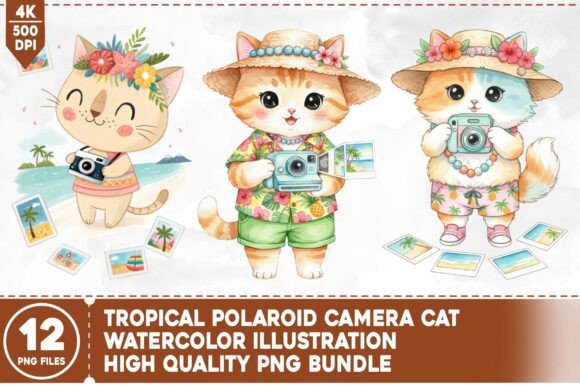
The core appeal of the Tropical Polaroid Camera Cat Watercolor lies in its layered visual narrative. Unlike standard vector clipart, which often relies on hard edges and flat colors, watercolor textures introduce organic variation. When combined with the retro frame of a polaroid camera and lush tropical foliage, the result is an image that feels handcrafted yet polished. This texture adds depth to printed materials, making them stand out against the backdrop of mass-produced, digitally perfect graphics.
From a technical standpoint, the asset is delivered as a high-resolution PNG file with a transparent background. This format is significant for several reasons. First, the transparency allows the image to be placed over various backgrounds—whether it is the white ceramic of a mug, the fabric of a hoodie, or the paper of a greeting card—without an unsightly white box surrounding the subject. Second, the high resolution ensures that the delicate brushstrokes remain crisp even when scaled up for larger formats like canvas prints or banners. The immediate availability via instant download streamlines the workflow, allowing creators to move from concept to production rapidly without waiting for shipping or file transfers.
Comparing Formats: Watercolor vs. Vector and Photography
When evaluating design resources, creators often weigh watercolor illustrations against vector graphics and stock photography. Each format serves different design goals. Vector graphics are defined by mathematical paths, making them infinitely scalable without quality loss. They are ideal for logos, large-format signage, and applications requiring sharp, clean lines. However, vectors often lack the textural warmth and "human touch" inherent in watercolor art. If a project aims to evoke emotion, nostalgia, or a handmade feel, the Tropical Polaroid Camera Cat Watercolor offers a distinct advantage over sterile vector alternatives.
Conversely, stock photography provides realism but can sometimes feel generic or disconnected from a brand's unique voice. While a photo of a cat holding a camera might exist, it is difficult to find one that perfectly matches a specific color palette or includes stylized tropical elements without heavy editing. Using a pre-designed watercolor illustration saves time on post-production while ensuring a cohesive artistic style. The tradeoff is that raster-based watercolors (like PNGs) do have a limit to how much they can be enlarged before pixelation occurs, though high-resolution files usually mitigate this for most print-on-demand applications.
Texture and Versatility in Print Media
The choice of medium significantly impacts the final product. Sublimation printing, commonly used for mugs, t-shirts, and backpacks, thrives on vibrant colors and detailed textures. The watercolor style translates exceptionally well to sublimation because the soft gradients mimic the way ink spreads on fabric or coated ceramics. In contrast, screen printing might require converting the image to fewer colors or simplifying the details, which could diminish the nuance of the original artwork. Therefore, the Tropical Polaroid Camera Cat Watercolor is best suited for digital printing methods that preserve color depth and gradient transitions.
Evaluating Commercial Usage and Licensing
A critical factor in selecting digital assets is the licensing structure. Many free or low-cost graphics come with restrictive licenses that prohibit commercial use or require attribution, which can complicate branding efforts. The Tropical Polaroid Camera Cat Watercolor operates under a license that explicitly permits commercial usage. This distinction empowers creators to generate revenue through various channels without legal ambiguity.
Permitted uses are broad and inclusive. Creators can incorporate the image into physical products such as pillows, plates, hoodies, and scrapbooking albums. It is also suitable for digital goods, including planners, birthday invitations, and thank-you cards. Furthermore, the license supports integration into print-on-demand services, where the image is printed only after a customer places an order. This model reduces inventory risk for entrepreneurs testing new designs. The ability to modify the graphic creatively—such as adjusting colors, adding text, or combining it with other elements—ensures that the final product remains an original design rather than a direct copy of the source file.
However, there are clear boundaries. Prohibited actions include reselling the image in its original format or distributing it as a standalone digital file. This restriction protects the intellectual property of the artist while allowing buyers to leverage the asset for their own creative endeavors. Understanding these limitations is essential for maintaining compliance and respecting the creator's rights.
Best-Fit Scenarios and Decision Factors
Determining whether this specific asset fits your project requires analyzing your target audience and product type. The Tropical Polaroid Camera Cat Watercolor is particularly effective for brands targeting demographics that appreciate vintage aesthetics, pet lovers, and summer-themed collections. It works well for:
- Greeting Cards and Stationery: The soft, artistic style conveys warmth and personal sentiment, making it ideal for birthdays, holidays, or thank-you notes.
- Apparel and Accessories: On items like tote bags, backpacks, and t-shirts, the tropical theme suggests a relaxed, vacation-ready vibe that appeals to casual wearers.
- Home Decor: Printed on canvas, pillows, or wall art, the image adds a pop of color and personality to living spaces without overwhelming the room.
- Scrapbooking and Crafts: Hobbyists looking for high-quality embellishments will find the transparent background and detailed texture perfect for layering in physical layouts.
Conversely, this asset may not be the right choice for projects requiring corporate minimalism, ultra-modern geometric designs, or hyper-realistic imagery. If a brand identity relies on stark contrasts and rigid typography, the organic flow of watercolor might clash with the overall visual language. Additionally, if the primary application involves massive billboards where extreme scaling is necessary, a vector-based alternative might be safer to ensure absolute clarity at any size.
Practical Considerations for Implementation
Once the decision is made to proceed, practical implementation steps ensure the best results. Since the file is a PNG with a transparent background, it is ready to be dropped into design software like Adobe Photoshop, Canva, or Illustrator. Designers should verify the resolution relative to their intended print size. While the file is high resolution, pushing it beyond its native dimensions can lead to blurring. For sublimation designs, it is advisable to work in CMYK color mode during the final preparation stage to match printer capabilities, although the source file is likely provided in RGB for screen viewing.
Customization is another key strength. Because the license allows for creative modification, users can alter the saturation of the tropical leaves to match a specific seasonal collection or add a custom font overlay to create a personalized message. This flexibility transforms a single asset into a versatile tool for multiple campaigns. For instance, the same base image can serve as a summer sale banner, a holiday card, and a merchandise design simply by adjusting the context and accompanying elements.
Conclusion: Making an Informed Choice
The Tropical Polaroid Camera Cat Watercolor offers a compelling blend of artistic charm and commercial functionality. Its distinct watercolor texture sets it apart from generic vector clipart, providing a tactile quality that resonates with consumers seeking unique, handcrafted-feeling products. The permissive licensing model further enhances its value, allowing for broad application across physical and digital markets without the fear of infringement.
While it may not suit every design brief—particularly those demanding strict minimalism or infinite scalability—it excels in scenarios where warmth, nostalgia, and visual interest are paramount. By weighing the strengths of the watercolor format against the specific needs of your project, you can determine if this asset aligns with your creative vision. For those who prioritize aesthetic depth and commercial freedom, it represents a robust resource for bringing imaginative concepts to life. As with any digital purchase, reviewing the file specifications and testing a small print run before full-scale production remains a prudent step to ensure satisfaction with the final output.